Keynotes
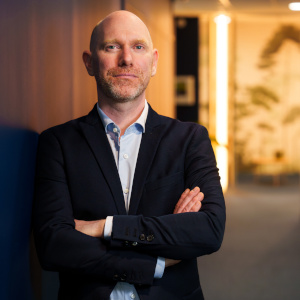
Benoit Grunemwald is Director of Public Affairs at ESET France. He regularly speaks with media, institutions, and professional organizations on issues related to cyber threats, cybersecurity, and the strategic challenges of digital transformation. He contributes to the dissemination of ESET's research on APT groups, cyber espionage campaigns, and the evolution of the threat landscape.
APT Operations Targeting European Organizations: Lessons Learned from Campaigns Observed in 2026
ESET researchers continuously monitor and analyze the activities of APT groups targeting organizations across Europe. This keynote provides an overview of the most significant campaigns observed in 2026 and the lessons they reveal. Drawing on recent investigations, it will highlight attacker objectives, targeted sectors, operational methods, and emerging trends shaping the evolution of cyberespionage and influence operations.
Language: English (subtitled in French)
With a background in cybersecurity, Esther L. is currently Head of Operations at VIGINUM. During 7 years at the French national cybersecurity Agency (ANSSI), she notably served as cyberdefense operations manager and later co-led the cyber threat intelligence team, which specializes in analyzing targeted threats such as espionage. In the summer of 2025, she joined VIGINUM.
Democracy under attack? The threat behind foreign digital interferences targeting France
Integrated into hybrid strategies of competition, contestation, or confrontation, digital campaigns of information manipulation have become a lever in international power relations. Leveraging social media, coordinated inauthentic behaviour, bots, AI, and increasingly sophisticated malicious infrastructures, foreign actors continuously adapt their tactics to target democratic societies, public debate, and French strategic interests. In this keynote, VIGINUM — the State's technical and operational department for vigilance and protection against foreign digital interference — will present an overview of the current threat landscape targeting France, and examine how these campaigns are detected and characterized through the analysis of technical artefacts. The keynote will also discuss emerging trends, the growing role of generative AI in these operations, and the importance of cooperation between public authorities, researchers, NGOs, platforms, and cybersecurity professionals to strengthen societal resilience against this growing threat.
Language: English (subtitled in French)
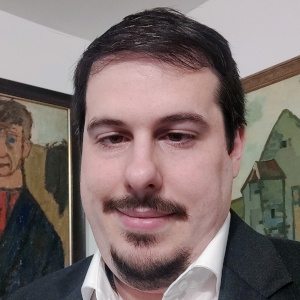
Antoine Delignat-Lavaud is a security researcher in Azure Research’s Confidential Computing group, whose focus is to build the secure cloud of tomorrow with hardware-based trusted execution technology, ensuring that all privacy-sensitive data remains isolated, encrypted and integrity protected thorough its lifecycle. He leads efforts on protocols, platform services, and hardware design with partner silicon vendors to develop confidential AI offering verifiable confidentiality of models, prompts and responses.
The Real-World Challenges of Scaling Up Confidential Computing at Azure Scale
Operating confidential computing services introduces new challenges beyond traditional cloud security. Clients must verify not only service identity but its attested implementation, yet distributing and validating attestation evidence at scale remains complex. Service updates require coordinated changes to attestation policies, while dependencies on other services extend the trust chain across multiple attestable components. Attestation is not in itself sufficient for establishing trust without a lot of additional evidence about how binaries are built and what they consist of. There have been many successful side-channel attacks that have managed to extract data from hardware isolated TEEs. In this talk I will present some of the protocols, services and architecture Azure has developed to make confidential computing practical for complex real-world services.
Language: English (subtitled in French)
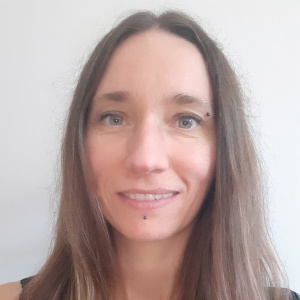
Delphine Longuet is a formal method research engineer at Thales cortAIx Labs. She obtained her Ph.D. from Université Evry-Val d'Essonne in 2007. We was an associate professor at Université Paris-Sud for 9 years, then she joined Thales in 2018. Her research interest are formal methods for the validation and verification of software. In Thales, she was co-leader of two projects on automated test generation, for Ada with AdaCore and for C with OCamlPro, with the aim of facilitating the industrial adoption of these techniques and tools.
Towards the industrial adoption of automated test generation techniques with SeaCoral
Formal methods have been successfully used to develop advanced test generation and vulnerability detection techniques but their adoption in industrial practice remains fragmented. In this talk, I will present SeaCoral, a novel open-source toolset for testing C programs, which aims to facilitate the industrial application of diverse testing and analysis tools by integrating them and making them collaborate within a single framework. I will present the different integrated tools and explain how SeaCoral makes them work together on the same code to produce tests to maximize a given code coverage criterion. Besides tests for coverage, a particular attention is paid to the detection of runtime errors, as potential sources of vulnerability, and to their reproducibility.
Language: English (subtitled in French)